It was a good rule of thumb during the Cold War that if an organization had the word “peace” in its name it was either an official organ of, or a front group for, the Soviet Union. The origin of this phenomenon was the 1948 “World Congress of Intellectuals in Defense of Peace” held in Wrocław, Poland. Sponsored by the Soviet Union and its puppet Polish regime, the mass assembly convened two months after the Soviet Union began what would be its nearly year-long blockade of Berlin. Notable figures from across the West including French cultural critic Julian Benda, German playwright Bertolt Brecht and the American novelist Howard Fast attended the conference, where speakers praised the Soviets and other “progressive” forces as peacemakers while denouncing the nations of the West as “warmongers.”
In 1949, the year the Soviet Union held its first nuclear weapons test, both a “World Committee of Partisans for Peace” was organized in Paris and a “Cultural and Scientific Conference for World Peace” was staged at that bastion of the proletariat, the Waldorf-Astoria in New York City. “Our country, the Soviet Union, stands for peace and friendship among peoples,” Alexander Fadeyev, chairman of the Soviet Union of Writers, declared, a claim wholly at odds with the violent actions Moscow was undertaking to solidify its rule over Central and Eastern Europe at the time.
By proclaiming themselves “partisans of peace,” the Soviets and their sympathizers in the West established a cynical dichotomy whereby anyone who opposed them intrinsically favored war. After all, what sort of person, what sort of country, could oppose something so noble as peace? This linguistic crime was used to obscure far graver, tangible ones, as the Soviets proclaimed their love of “peace” while using violence or the threat of it to conquer territory and subjugate nations.
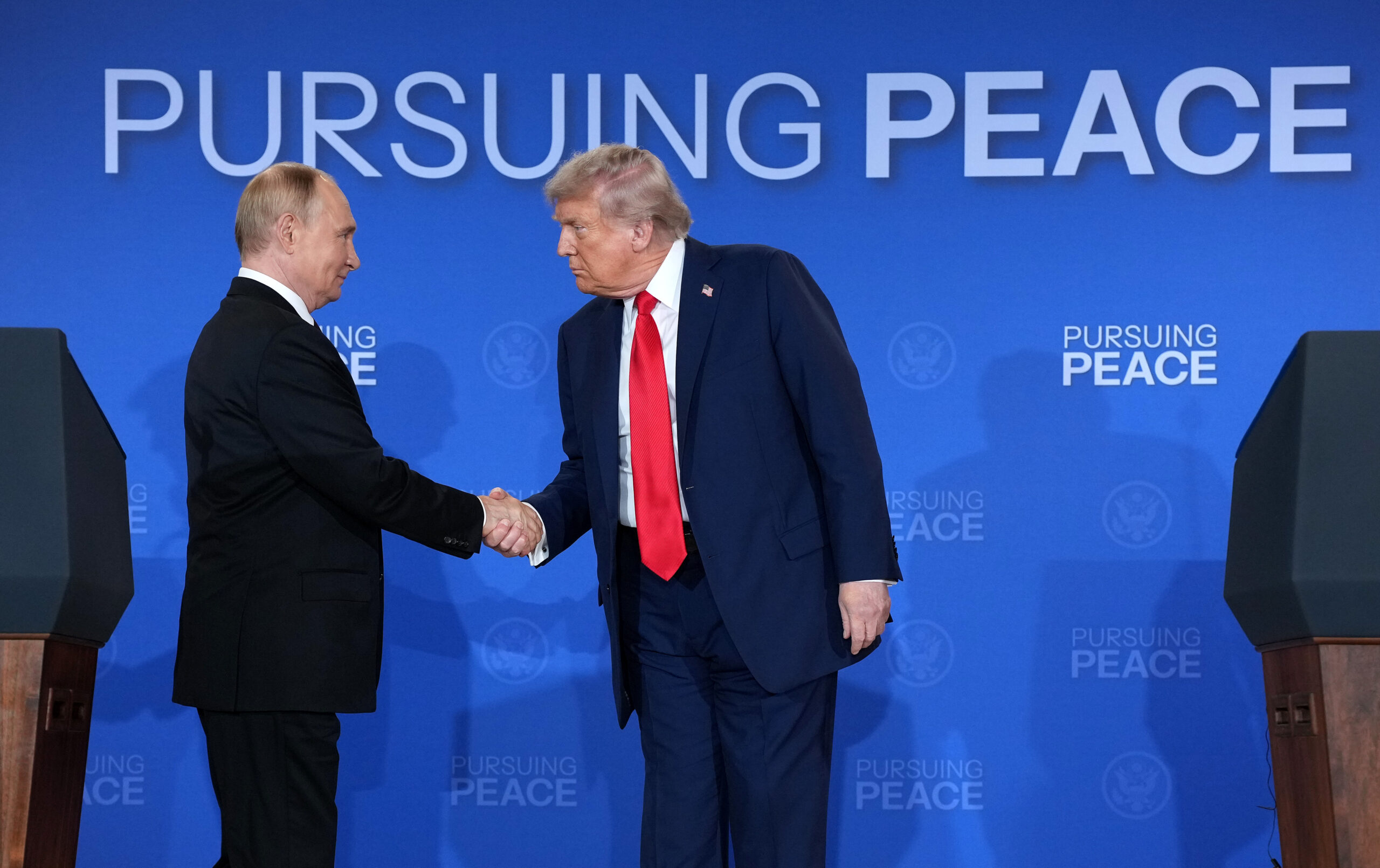
Today, Russia is following the same playbook, making “peace” proposals that are virtually the same as the unilateral demands issued by Russian President Vladimir Putin before launching the full-scale invasion in 2022. The Trump administration nonetheless used them as the starting point of their own deal and is pressing Ukraine to accept them
In this context, the history of Moscow’s previous “peace” efforts is instructive. No organization was more prominent in the Soviet-era “peace” campaigns than the World Peace Council, founded in Paris in 1949. The WPC’s most attention-grabbing initiative was its “Stockholm Appeal” calling for the prohibition of nuclear weapons. Six hundred million people around the world, the council claimed, had signed their names to the petition, a figure that apparently included every adult living in the Soviet Union. Recognizing the obvious, France expelled the WPC in 1951 on the grounds that it was a foreign communist-controlled organization. The group relocated to the Soviet-occupied zone of Vienna, where the Austrian Interior Minister complained that it had “nothing to do with peace.” Wearing out its welcome there, the itinerant peace seekers eventually found their way to neutral Finland, where the WPC remained for the rest of the duration of the East-West conflict.
In the wake of World War II, the most destructive war mankind has ever known, millions of people were eager to join this Soviet crusade for “peace.” Throughout the 1950s and 60s, organizations operating under the banner of “peace” formed around the world spewing similar bromides as the WPC, decrying NATO military exercises as “warmongering” while twisting themselves into pretzels defending Soviet invasions of sovereign states as “peacekeeping.” In the United States, the American League for Peace and Democracy, the American Peace Crusade, American Peace Mobilization, the National Committee to Win the Peace and dozens of other “peace” organizations promulgated a line indistinguishable from that of the Soviet Foreign Ministry. While many of the individuals involved in these organizations were communists and fellow-travelers, many were well-intentioned, if credulous, idealists.
To those who would point out the hypocrisy of an empire built and ruled by the use of brute military force endlessly declaring its desire for “peace,” the Soviets and their Western camp followers had a ready reply. A core tenet of Marxism holds that capitalism inevitably leads to imperialism and war. Overthrowing capitalism, then, is the only way to ensure permanent peace. Supporting armed revolutionary forces in non-communist countries (as the Soviets did from Nicaragua to Angola) or invading communist countries that go astray (as happened in Czechoslovakia and Hungary), is therefore merely a means of preemptively producing peace. (One might even call it preventive war). The contradiction was admitted by a communist Hungarian newspaper when it let slip that “We cannot tolerate with the Peace Movement any symptoms of detrimental pacifism.”
In 1954, the Soviet Ministry of Defense laid out this reasoning in more detail: “Whilst carrying on a struggle for peace, Communists are not, however, pacifists who sign for peace and limit themselves to propaganda for peace. They consider that in order to remove the inevitability of wars it is necessary to destroy imperialism… The bourgeois-pacifist attitude towards war, which stresses the ‘horrors’ of war and inculcates hatred of all wars, is alien to us. Communists are against imperialistic wars as being counter-revolutionary wars, but they are in favor of liberating, anti-imperialist, revolutionary wars.”
Such baldfaced hypocrisy was chillingly familiar to anyone who had read George Orwell’s dystopian novel 1984, in which the phrase “war equals peace” stands as the paradigmatic example of totalitarian “doublespeak.” Communists and their fellow-travelers had their marching orders: Each and every military action undertaken by the Soviet Union was justified on the grounds of being “anti-imperialist” while each and every military action undertaken by a Western country was denounced as “imperialist.” The self-abnegation required to perform such mental gymnastics was how the Soviet Union and its supporters in the West could glide so effortlessly from decrying Nazi Germany as the fount of fascism to signing a non-aggression pact with Berlin to waging war against it all within a period of three years.
It’s no coincidence that the “peace” offensive began in the early years of the Cold War, when the Soviets lacked a nuclear deterrent. The next great push for “peace” was in the early 1980s, when President Ronald Reagan came to power determined to defeat, not coexist with, communism. The arena for battle was Western Europe, where a heated debate began over the proposed stationing of American intermediate-range Pershing 2 missiles to counter the prior Soviet placement of mid-range SS-20s. A 1983 front page story in the New York Times described how the Danish and Swiss governments had “exposed attempts by ostensible Soviet diplomats, actually KGB officers, to influence or buy their way into groups” opposed to the deployment.
The most consequential debate occurred in Germany, where the West German Green Party accused communists of hijacking efforts to plan a large demonstration against Reagan and NATO during a summit meeting in Bonn. The fruits of this infiltration were apparent in the event’s resolution, which condemned American foreign policy but was silent on the Soviet invasion of Afghanistan and the imposition of martial law in Poland by the ruling military junta (a representative of which was applauded at a World Peace Council conference). The tacit approval of Soviet foreign policy was also evident in the peace movement’s slogan against the Pershings, “No New Missiles in Europe” (emphasis added).
This decades-long exploitation of the basic human desire for peace illustrates how the word means different things to different parties. In free societies, “peace” is straightforward: the absence of war. To the men in the Kremlin, “peace” is subjective, meaning whatever facilitates their ambitions by removing their need to use force to get what they want.
As the Soviet dissident Vladimir Bukovsky wrote in 1982, “Probably from the very first, Bolshevik ideologists were aware of how powerful a weapon for them the universal craving for peace would be — how gullible and irrational people could be whenever they were offered the slightest temptation to believe that peace was at hand.”
While the Cold War may be long over, recent developments have demonstrated that the susceptibility of the gullible and irrational to Russian deception is not.
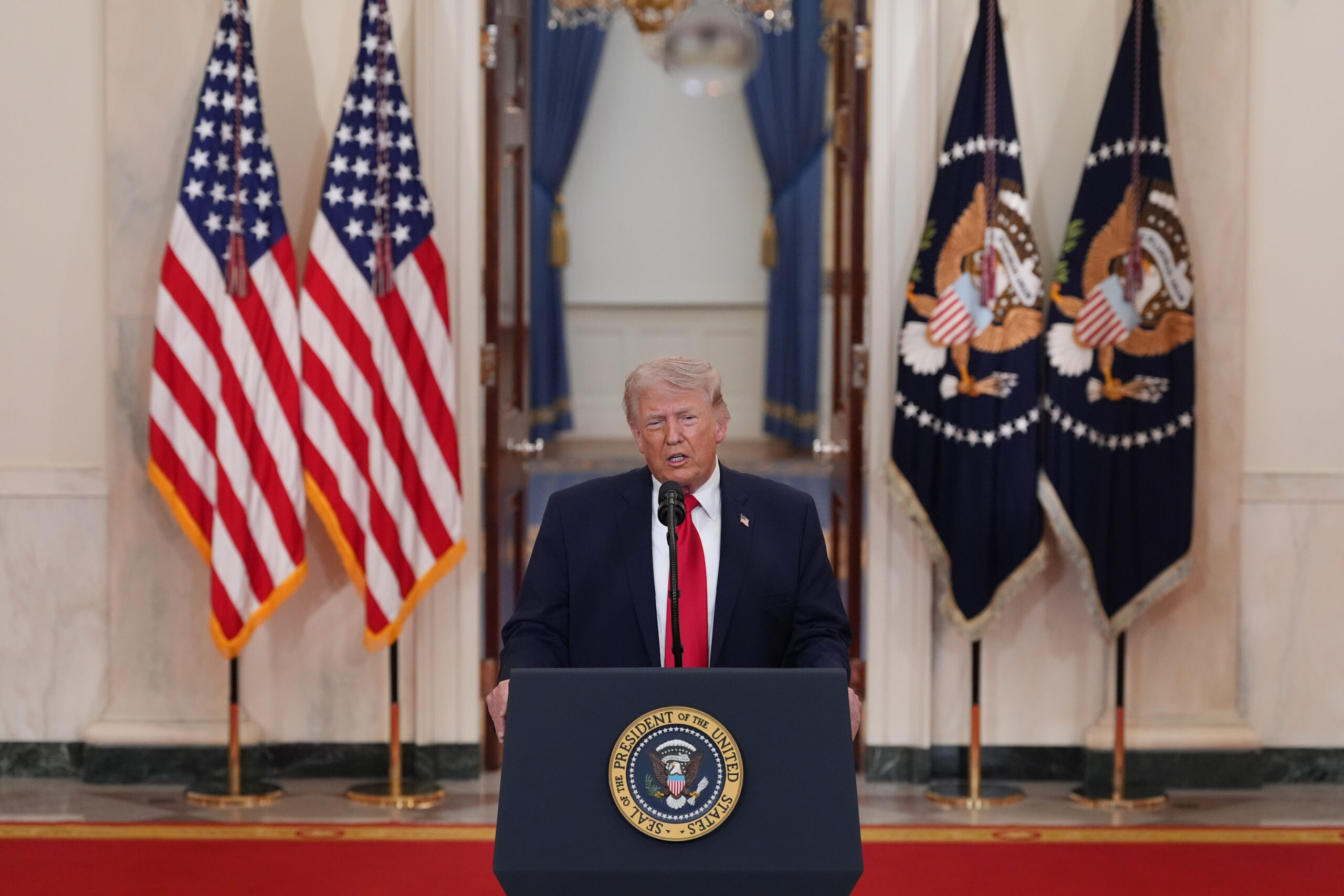
President Donald Trump has often referred to himself as the “president of peace,” and his administration recently took two steps to formalize that self-declaration. First, the State Department announced that the U.S. Institute of Peace would be renamed the Donald J. Trump Institute of Peace to “reflect the greatest dealmaker in our nation’s history.” More substantively, the administration released its National Security Strategy, which stresses Trump’s legitimate peacemaking bona fides while betraying an attitude toward “peace” alarmingly in accordance with the Russian conception of that word.
First and foremost, the document no longer describes Russia as a threat. This strongly contradicts the outlook of the first Trump administration, which in its strategy document asserted that Russia “want[s] to shape a world antithetical to U.S. values and interests,” “aims to weaken U.S. influence in the world and divide us from our allies and partners,” and “challenge[s] American power, influence and interests, attempting to erode American security and prosperity.” The 2017 National Security Strategy also called out the Russians for their weapons development programs, for “attempt[ing] to undermine the legitimacy of democracies,” and for “using subversive measures to weaken the credibility of America’s commitment to Europe, undermine transatlantic unity and weaken European institutions and governments.”
Under its new National Security Strategy, the Trump administration calls for “ending the perception, and preventing the reality, of NATO as a perpetually expanding alliance,” thereby putting an end to 35 years of bipartisan support for enlarging the Atlantic Alliance to European democracies that meet the criteria for admission. The administration also blames our democratic allies, rather than the aggressor state, for the lack of peace in Ukraine. Of course, “a large European majority wants peace,” the document asserts. But what kind of “peace?” A poll conducted earlier this month by a French magazine found that 80 percent of Europeans do not believe Russia really wants peace, and that 61 percent want their countries to maintain or increase support for Ukraine. For their part, European leaders express a more sophisticated understanding of the word, arguing that any “peace” deal that doesn’t include surefire security guarantees for Ukraine will just be a temporary respite until Putin feels prepared to invade again.
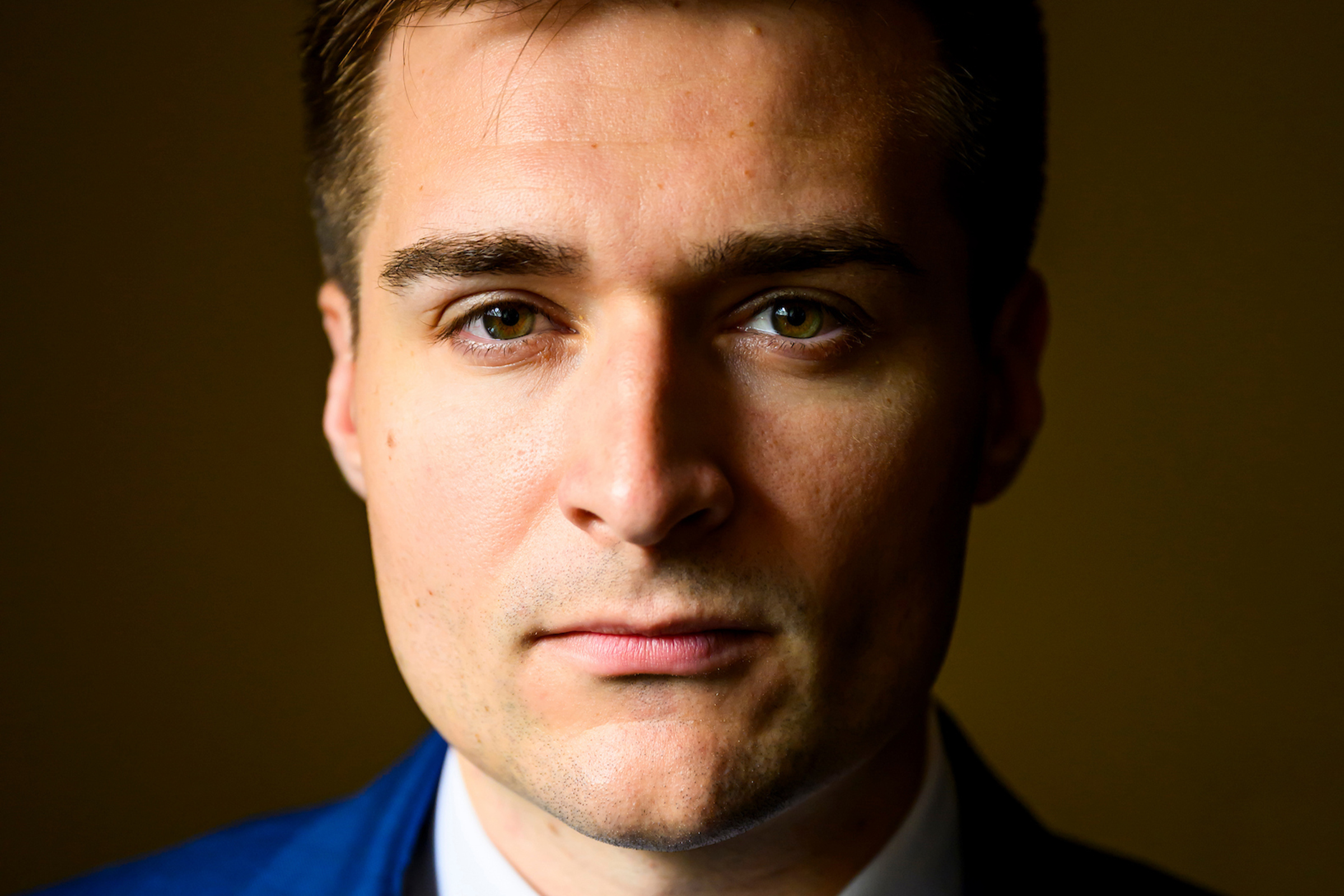
All of this is important background for understanding the chain of events that have transpired over the past several weeks involving the Trump administration’s latest proposed “peace plan” to end the war in Ukraine. On Nov. 20, a 28-point peace plan leaked to the media. Purportedly drafted by Steve Witkoff, a New York real estate developer and the president’s golfing buddy, with input from his nominal boss, Secretary of State Marco Rubio, and the president’s son-in-law, Jared Kushner, the proposal acceded to Russia’s major demands while violating multiple Ukrainian red lines. In exchange for a cessation of hostilities, the deal would award Russia more territory than it has captured, formally prohibit Ukraine from ever joining NATO, place a cap on the size of the Ukrainian military, prevent soldiers from NATO countries being stationed on Ukrainian soil, unfreeze billions of dollars of Russian assets held in Western banks and, most crucially, lift economic sanctions that have been in place on Moscow since its 2014 annexation of Crimea. In return for all of these goodies, the Ukrainians would have received vague assurances about their future security amounting to little more than a pat on the back.
The impression that Witkoff has fallen under the spell of the Russian understanding of “peace” was reinforced by an Oct. 14 phone call he had with a senior Russian official, the transcript of which was leaked to Bloomberg late last month. “The Russian Federation has always wanted a peace deal,” Witkoff told Yuri Ushakov, Putin’s senior foreign policy adviser, a strange thing to say about a country that invaded its neighbor unprovoked 11 years ago. “That’s my belief. I told the president I believe that.” Witkoff suggested that Ushakov tell Putin to call Trump before Trump’s meeting with Ukrainian President Volodymyr Zelenskyy on Oct. 17. Ushakov followed Witkoff’s instructions and Trump spoke to Putin for two hours on Oct. 16. The next day, Trump refused to sell Ukraine Tomahawk missiles he had been hinting he would sell them just days before, and pressured Zelenskyy to give up land the Russians currently do not control. Two days after the transcript of the Witkoff call was released, Putin defended the American from accusations of pro-Russia bias, saying that he is an “intelligent man.” Like “peace,” “intelligent” must be a word that means something different in Russian.
The Russians have long been accurate in viewing entrepreneurs like Witkoff as easy marks. Despite all their ranting about the evils of capitalism, Soviet leaders often found themselves in alignment with Western businessmen, mainly in opposing anything that would hinder East-West trade. The AFL-CIO did far more to bring down communism in Eastern Europe than the Fortune 500. The affinity between crony capitalism and the Kremlin became even more pronounced after the collapse of communism, as Russia became a criminal syndicate masquerading as a national economy.
Putin well understands that businessmen, not particularly known for their moral concern, prioritize making money over abstract concepts like “peace.” That’s why the Kremlin is appealing to the Trump administration’s corporate board-like mentality, highlighting the economic benefits that will accrue to the United States (well-connected businessmen more specifically) if the conflict is ended promptly on Russian terms. For any deals to work, however, sanctions on Russia must be lifted. In pursuit of this objective, Witkoff has been bypassing normal diplomatic channels, often declining to coordinate with European allies supposedly because using secure communication methods is too “cumbersome” for him. (It was presumably a similar carelessness about operational security that led to Witkoff’s conversation with Ushakov being intercepted and leaked).
Unlike democratic peace theory — the empirically true contention that democracies don’t go to war with each other — the notion that countries which trade don’t go to war with each another is an old, dumb idea that is empirically untrue. It’s of a piece with the very American (and very Republican) belief that a country is best run like a business, a folly that runs through Trump’s ludicrous claim in the 1980s that he could singlehandedly end the Cold War “in one hour” to the presidential campaigns of Ross Perot, Steve Forbes, Herman Cain and Carly Fiorina. Like the tradition of foreign policy “realism” from which it descends, this technocratic, single-mindedly rationalist worldview has no place for the role of morality or ideology in international relations, or for entertaining the possibility that when Putin delivers an interminable lecture on the indivisibility of the Russian and Ukrainian peoples, he actually means what he says and is willing to sacrifice hundreds of thousands of young men to achieve it.
Oddly for a team of hard-nosed businessmen who pride themselves on their tough negotiating skills, Trump, Witkoff and Kushner are applying pressure in a wholly disproportionate fashion on the conflict’s victim while giving the aggressor a pass. At best, they seem to believe that both nations are equally at fault, and that the United States should not take sides between a Western-aligned democracy (however flawed) and an inveterately anti-American, authoritarian adversary.
“He’s gotta know he’s going to get ground down,” Witkoff told Tucker Carlson about Zelenskyy, agreeing with the host’s contention that Ukraine will lose the war, a rather odd thing for an American diplomat to telegraph publicly concerning the recipient of billions of dollars of American military aid. Such statements painfully illustrate Witkoff’s lack of diplomatic experience and feed into Russian narratives that Zelenskyy is somehow the obstacle to peace. Ahead of talks in Moscow earlier this month, Putin said that he was meeting with Witkoff and Kushner because the actions of European nations “are aimed at only one thing: to completely block this peace process.”
That Witkoff might be the sort of man who takes the words of a mass-murdering dictator at face value was visible early in the administration. In his interview with Carlson last March, Witkoff discussed a visit he had made with Putin to discuss the parameters of a possible deal to end the war. Witkoff wrangled a 30-day halt on Russian attacks against Ukrainian energy sites, which Putin formalized over the phone with Trump six days later. “It was gracious of him to accept me, to see me,” Witkoff told Carlson of the Russian president, whom Witkoff praised for being “straight up with me” despite making him wait eight hours.
What impressed Witkoff most about his encounter with the Russian leader was the vast gulf between the malevolent villain portrayed by the Western media and the real Putin he had come to know over the course of two face-to-face meetings. A gift of a Trump portrait and Putin’s assertion that he had prayed for the president after last year’s assassination attempt was apparently all the evidence Witkoff needed to understand the former KGB officer’s “gracious” frame of mind.
Unfortunately, there’s no transcript of this conversation, but even if there was we wouldn’t be able to rely on it as Witkoff, defying every diplomatic protocol and basic common sense, refused to bring a State Department translator with him. “This is the kind of connection that we’ve been able to reestablish through, by the way, a simple word called communication, which many people would say, you know, I shouldn’t have had, because Putin is a bad guy,” Witkoff explained later. “I don’t regard Putin as a bad guy.”
Like the president he serves, Witkoff exhibits blind faith in the very act of talking to an adversary. When Witkoff sarcastically refers to “a simple word called communication,” he is creating a straw man, one frequently erected by the MAGA right, positing that the Trump administration’s foreign policy critics oppose diplomacy itself. But the problem isn’t talking to an adversary; it’s talking to an adversary for the sake of talking. Case in point: That 30-day halt in attacks on energy installations Witkoff apparently won from Putin? The Russians violated it dozens of times. So much for Putin being a “straight up” guy.
Today, the World Peace Council is largely defunct, but its mission, tactics and rhetoric live on. The Kremlin’s incessant talk about “peace” has the same purpose it did during the Cold War: to soften the West in order to further Russian aggression and expansion. Preying upon Western fears of “World War III” (another staple of Soviet rhetoric that Trump and his acolytes echoed during the 2016 election), it feigns a desire for peace while implicitly threatening war.
Once it was naifs on the left that fell for this imposture; now it’s growing sectors of the right that have become susceptible to Soviet-era linguistic sophistry. Both sides suffer from a failure to understand the nature of the Kremlin regime, which depends upon violence and the constant threat of it to survive.
Then, as now, accepting “peace” on Moscow’s terms means letting the Russians do whatever they want.