
SAN FRANCISCO — It was one of those days in San Francisco: Sun shining, temperature just right, the city at peak charm. This was weather that makes you forget about the gloomier days, those that evoke the old chestnut attributed to Mark Twain: “The coldest winter I ever spent was summer in San Francisco.”
So it was understandable that when Gov. Gavin Newsom arrived at Sam’s Grill for our conversation, he lingered, jacket off, outside the 159-year-old restaurant for a few minutes. Newsom was catching up with his original political patron, Sam’s regular and San Francisco mayor-for-life Willie Brown.
I didn’t want to disrupt the reconvening of two mayors, but Dungeness crab awaited.
I won’t bury the lede: Newsom, eventually, took a few bites of the glorious array of seafood, sourdough and avocado that Sam’s brought to our table.
It was the last of these that tempted the governor, because the avocado evoked a memory from his otherwise forgettable tenure as lieutenant governor, when he was Gov. Jerry Brown’s understudy for eight years in Sacramento. One of the only happy political memories from that period was when Newsom, in an Al Haig-like seizure of executive power, took advantage of Brown being out of state one day to use his powers as acting governor to declare the avocado California’s state fruit. Not a joke, folks.
Newsom can laugh about it now. He’s the de facto leader of the opposition to President Donald Trump, his party’s early frontrunner for 2028 and author of the best selling memoir Young Man in a Hurry: A Memoir of Discovery.
For Newsom, Sam’s is home. The governor’s father and grandfather, both backstage political fixers, supped at the private booths behind curtains here. Politics is what ruined his parents’ marriage — and also ultimately helped him repair his relationship with his father when Newsom did what his dad failed at twice, winning elected office. Newsom tells me that history is central now as the governor considers his own family, his wife and their four children, and the veto they have over his presidential ambitions.
In our discussion, which ran over an hour, Newsom discussed his party always “trying to be right” rather than fighting with fire and why he’s doing so now with Trumpian tactics, even if that means being “a Democratic Trump,” as one of his potential 2028 intra-party rivals seemed to imply.
And, of course, there’s plenty on his relationship with Trump, including their conversation earlier this year at Davos.
Partial excerpts of my discussion with Gov. Newsom — and a surprise cameo from Brown — are below.
For more on Newsom’s views on the politics of AI, how Kamala Harris’s loss could shape his prospects and how he could grow up in 1970s San Francisco and not smoke weed, watch the entire conversation on YouTube or listen to it as a podcast here.
This conversation has been edited for length and clarity.
I don’t think I’ve ever done this. I’ve read so many politicians’ books, so many of these memoirs, these quickie campaign books. They’re all — to be totally kidding — they’re pretty crappy. This is a real book.
Even if you’re lying, thank you.
You’re a politician. I know there’s plenty of political stuff in here, but you obviously put a lot of time into this. And it’s not just about you. This is about this city. This is about your family story in this city. And this is about also, as you put in the subtitle, about this sort of feeling of discovery here.
It is a memoir. It [took] five years. Five damn years.
Why so long?
I had to go back. That’s why it was a memoir of discovery. To learn not only about myself in relationship to San Francisco and its past, but moreover to learn about my mom and dad and my grandparents and their parents, and as a consequence, learn more about this state and the state of mind that has defined so much of my childhood here and in San Francisco.
You are almost like a Northern California Forest Gump. I mean, you have lived this life in which there’s these incredible cameos from people across American history.
So this is from memory, but your aunt was married to Ed Asner, the actor. Your mom briefly dated Rick Barry, the basketball player, who was famous for doing the underhand free throws.
Yeah. Very briefly. One of the best free-throw shooters, one of the best basketball players ever.
You’ve got this life in which you also were traveling all over the world in these incredible places, hanging out with the Spanish royal family, and you detail all of that. You don’t bullshit about the privilege you had in a lot of ways, but you also are emphatic to the point of almost being angry on one page, where you say, the reason I wanted to do this book is because it’s not just about Gavin and the Gettys. It’s not just about this incredible life I had in Pacific Heights. It’s also the latchkey kid story. And you feel strongly about capturing this duality?
Neither parents lived in Pacific Heights, but my dad knew folks that lived there. So there was this perception that somehow I was born with a suit and tie on. I was born into privilege.
But there’s a whole other part of my life that has never really been discussed, explored. Frankly, I’ve been defensive about it in the past. I’ve never been able to write that story. And that story is not just about me, it’s about doing justice to my mom. Doing justice to her story. Doing justice to my father and his story. I wanted to get the record straight in that respect. But I also, I wanted to give them the dignity that they deserve. Because, you know, for a mom that was a single mom that was 19 when she’s pregnant having me, she’s divorced two years later, worked two, three jobs her entire life, came from no wealth back to a very broken family, which I write extensively about; my father who passed away with books and a second mortgage as the inheritance that I received from him — their lives are very different than is perceived as well. And so I’m just trying to shape that I’m a product of both and.
I’ve been an imposter in one world, in the Getty world, where I never felt like I belonged, and I write some stories that really underscore that. And the world that defines me is the world that anchored me, and that’s the world of a single mom. The grit, the hard work, the sacrifice and her love. That’s the reason we’re sitting right here.
We’re sitting here in Sam’s, which is an iconic political hangout in San Francisco. Willie Brown’s here, we just him saw a minute ago. But this is kind of the place, right? The judges come here, the politicians, some of the big donors, except for on Fridays, when they go to Le Central, and that’s the sort of long-standing lunch bunch that included your dad Judge Newsom, the columnist, Herb Caen and Willie Brown and everybody else there, right? Do you have memories of coming here at all?
Yeah, of course. Oh, I have some good ones and bad ones.
What are the bad ones?
You have celebrations, you have memorials, weddings and funerals.
Irish wakes.
Right where the booths are, right over there, they know your drink, they know your menu and they know your politics — especially here.
I had a meeting here, I’ll never forget, when I was looking to run for governor, or rather looking to run for mayor at the time. It was with one of the power brokers — I won’t mention who — of San Francisco, and I sat down in one of those booths, and the guy read me the riot act and said, “Don’t even waste your time running for mayor, you are not qualified.”
Did you remind that gentleman later about his prediction?
It’s so interesting. This book is really, it’s dozens of those stories, the examples scrutinizing and not sanitizing my past — the good and the bad, the doubts, the anxieties that shaped me and who I am today. And so that was one of the great gifts, because I remember that rocked me. It made me recalibrate a lot of things, and it made me work harder, right? And in so many ways, I’m so grateful for that example. By the way, he’s turned out to be a huge supporter of mine, and I’m blessed by it, but it was very, very, very damning. So these four walls, they have a lot of memories.
It’s a grittier city than people realize, because the perception of San Francisco is the tech bros. It’s Pacific Heights. It’s these elegant cable cars. Historically, it was a rough union town. Very much Irish, Italian, ultimately Chinese coming in. There was a lot of violence down on the docks. And in some ways, I think you try to capture that. You try to send a message that, “Maybe I come off as sort of this handsome suave guy, but there’s some grit under my fingernails too.”
Was that kind of the idea?
No. I mean, again, I wasn’t trying to impress anybody with this book. I was just trying to impress upon ’em who I am. And love me, hate me — I’m good with it. I used to spend all my life…. I talked about Oscar Wilde: The first duty in life is to assume a pose. And I was assuming a pose, I put a mask on. And it mattered to me how people perceived me.
When did that stop?
Over the process of the last many years, particularly as my kids are getting older, as I’m getting older, where I have a sell-by date, I’m a milk carton in terms of being termed out. In terms of the recall and what that meant to me when I was on the ballot getting recalled — you want finality, you want humility — the grace to which I came out of that, a little bit stronger, a little wiser. And so in this process of maturing, I’m accepting the things that in the past I was fighting against and I was unwilling to accept.
It took you until you were over 50 for that to happen.
Oscar Wilde also said the second duty in life, no one knows. And I’m in the second phase of life. Look, when you put everything out there, and I put it all out there, it’s a process of letting go.
And again, you can’t control the third thing. And everybody spends their life in politics trying to control the third thing: How you perceive me. And you realize, the more you do this, you cannot control what you can’t control. And so this notion of it’s not what happens to you, it’s how you respond to what happens to you. Control what you can control. And for years, I was trying to control things that were out of my control. And so much of my life is reflected in those stories, in that past.
But the answer Gov. is not satisfying for people because the answer as to who you are is, “I’m both. I’m not either.” And I think people wanna say, “[you and your sister] were latchkey kids growing up, or you were hanging out on a safari with the Gettys.” You’re saying, “I’m both.”
Yes.
But also on politics, too. I talked to you before about this, I say Gov.: Are you a progressive or are you a moderate? And you refuse to answer that question!
Well, I just don’t — I’m pro-business. And you can’t be pro-job by being anti-business. And I also recognize businesses can’t thrive in a world that’s failing. What the hell’s wrong with holding those two things in your hand? I’m for growth and inclusion.
What the hell’s wrong with holding this notion that I’m for opportunity and responsibility? Why can’t I hold those two things in my hand? A guy did universal healthcare, not talking about it, delivered. Did $25 minimum wage for healthcare workers. Didn’t talk about it, delivered. $20 [an hour] for fast food workers, didn’t talk about it, delivered it. But also wants to balance budgets. Believes in a progressive tax, but at the same time believes that we can’t be profligate, and nor should we be, to be progressive.
And so I don’t think any of those things are contradictions. I find it very lazy and oftentimes deeply frustrating and potentially problematic that we are so quick to put people in these neat little boxes when most of us in our private lives experience, I think, a much deeper understanding of nuance than is reflected in the commentary about our politics.
Everybody in my business assumes that you’re running for president. It’s a done deal. You already have the placards, you already got the website. I get the sense from reading this book that that’s not an easy call for you, in large part because of the fact you have four kids today and you lived this in your own life.
You saw what politics did to your mom and your dad. How central is that in your choice here about ’28?
You’ve been gracious enough not to talk about my first marriage, which didn’t work out, and how I was walking down a path of my father. And when I met my to-be wife, Jen, I mean, there’s no doubt, she [asked]: Who are you gonna be as a husband? Who am I marrying here? And then after we’re married: What kind of dad are you gonna be? Are you gonna be your father? Are you gonna be something else?
She actually said that?
[In the book] I talk about the time we spent together having those conversations, as I was cracked open, as I had to come to grips with a lot of things. And the point being that I’m not gonna screw that up, and there’s nothing more precious. It’s a rocking chair test. You don’t get a do-over there. Politicians’ kids? How many of those stories have we read?
My mom’s last words she said before she passed, to my sister and I — this is why my sister broke down and cried and took off — she said, “My works of art” to Hilary and I. And Hilary just broke down. The last words before she started just desperately trying to breathe for what felt like 10 minutes.
And those are my works of art — as imperfect and beautiful as they are, those four kids. And I am not gonna screw that up.
So how do you figure this out, Gov.?
They figure it out. It gets figured out.
They have a veto?
Look, there’s no placards. There’s no decisions being made.
So what’s the whip count now?
It depends on the day of the week.
So you got four kids plus Jen, so you’ve got five votes. Where are the five votes today? How’s it looking?
We will see. My son, I mentioned this on the book tour, he’s a 14-year-old. He was a guy that after I did this podcast and interviewed Charlie Kirk, he was so excited. He knew all about Charlie. And so he’s in that space. And he sent me something a few weeks ago — maybe it’s a couple months ago now — and he said, “Dad, are you running for president?” He saw some headlines. I said, “No, that’s all nonsense.” And he goes, “Good.” And I said, “What do you mean good?” He goes, “Well, we’re too young, and you need to spend more time with us.” And I screenshotted that. I wish I could even show you. It was even more poignant than that. He had a few extra lines. And this is my son, who doesn’t talk like that. And for him to do that, how about the lightning bolt there, man? So yeah, they have vetoes.
But so does the public. You gotta have a big enough why, right? You gotta meet the moment. You gotta have the humility and the confidence at the same time to think that you can add value that doesn’t exist versus the lineup of other people. And this is a process that unfolds, fate will determine.
People should know that you’ve known the president for a while, and this relationship, in some ways, reminds me of the old WWF, where you guys go out and on stage, but backstage, though he treats you very differently, right?
And I write about that in the book, right? About the origin story, where we were together during my transition as governor-elect, and we had one of the worst natural disasters, Paradise, California, 85 lives lost. He came out to visit. I was lieutenant governor, was with Jerry Brown, was in Marine One, Air Force One. It established at least a relationship that I was able to carry through during Covid, which became very valuable as a Democrat, that wasn’t a sparring partner, more of a working partner with Trump during those last two years of Covid, which were critical for our state. And so I’ve always had that state of mind, it’s why I went out there on the tarmac in Los Angeles. It’s why I spent 90 minutes with him in the Oval Office without cameras, and jawed back and forth in terms of just trying to engage and be constructive.
That said, he’s not the same guy. Also, he’s increasingly derivative of himself. He’s, I think, unmoored, unhinged and he’s flailing. He’s a punch-drunk boxer in so many ways, and he’s becoming more dangerous. And I saw that last June, after a 17-minute conversation, and the next day, when he put out a tweet saying he was federalizing — first state to do it — the National Guard sent 700 active duty Marines to the United States of America, not overseas, in LA. That’s when things shifted in a much darker way.
And even most recently, at Davos, he was there, you were there at the same time, and he’s talking to you backstage.
Grabbed me, yeah.
But he’s like, coaching you on politics and PR, right?
It was a fascinating conversation, where he’s just, “We used to get along great. What the hell, Hey, we’re gonna be great.”
He wants to win you over in person.
He wants to win everyone over. And look, I admire that on some level. There’s a human quality to that. He needs to be needed. He needs to be loved. But then you get into some clinical components of that as well. I don’t wake up every day to try to find a crowbar to put in the spokes of his wheel. That said, I’m going to stand my ground. I’m going to fight fire with fire. We’re going to have the backs of our diverse communities, and we’re going to fight back. And, yeah, fight fire with fire. And I know two wrongs don’t make a right, but with all due respect, we’ll lose this country as we try to win that argument, and Democrats are constantly trying to be right. The other side is ruthless, and with respect, my party needs to be more ruthless about winning, because if we don’t win back the House of Representatives, we may not have a fair and free election in 2028, and I really believe that.
So, Gov. Wes Moore from Maryland said the other day, Democrats don’t need a Democratic version of Donald Trump. He may have been alluding to you, at least implicitly. Does that bother you?
No, because I love Wes. I was just with him at Jesse Jackson’s memorial, and we sat next to each other. I was reminded how much I respect and admire him.
Bad take though?
Right now, we’ll lose this country if we are not aggressive. I understand all the punditry, and you and others will write a legendary amount. There’ll be more ink spilled on this. When are we going to pivot from resistance to renewal? I think the renewal part’s the easiest part. I think resisting the impulse to be complicit by saying, “We’re not going to respond to this” [is harder]. I think that’s what Trump is counting on, to completely anesthetize us. The shock and awe to be so overwhelmed, that he can run the tape and he can literally —
You think renewal is easy, Governor?
By contrast to the assault on institutions, the assaults on the rule of law, on the assaults of…
Do you think you can just turn the switch back on?
By contrast, that’s the easier of the propositions. I could do a 10-point plan right now for America’s renewal around service and around shared experiences. To talk about this notion of responsibility, not just opportunity, in the context of what I was referring to a moment ago. To talk about some of these tectonic issues that are all converging. And so you can start to knit all that together, create a compelling narrative around that. But right now, you’ve got to deal with the fact that this guy’s trying to nationalize the federal elections. That [what] this guy’s trying to do is save the Save Act, which is about literally wiring the elections, as he said, for the next 50 years.
The cronyism, the state capitalism …
The house is on fire now, is what you’re saying.
This corruption story, rewriting history, censoring historic facts. This is Code Red. And so we have to meet that moment.
So let’s wrap here with a few lightning round adjacent questions. Do you consider yourself a Zionist?
Do I consider myself Zionist? I revere the state of Israel. I’m proud to support the state of Israel. I deeply, deeply oppose Bibi Netanyahu’s leadership, his opposition to the two-state solution and deeply oppose how he is indulging the far-right as it relates to what’s going on in the West Bank.
Do you regret using the word apartheid to describe Israel?
I do in this context. I said it, and I referenced why I used it — a Tom Friedman article — in that same sentence where Tom used it in the context of the direction that Bibi is going —
Not the current state?
Correct. And that is a legitimate concern I have, that I share with Tom — that that direction, if that vision and that direction of the far right that Bibi is indulging, that if they see the full annexation of the West Bank, then that’s not something — that’s a word you may hear others use.
Should the U.S. try to bring democracy to Cuba?
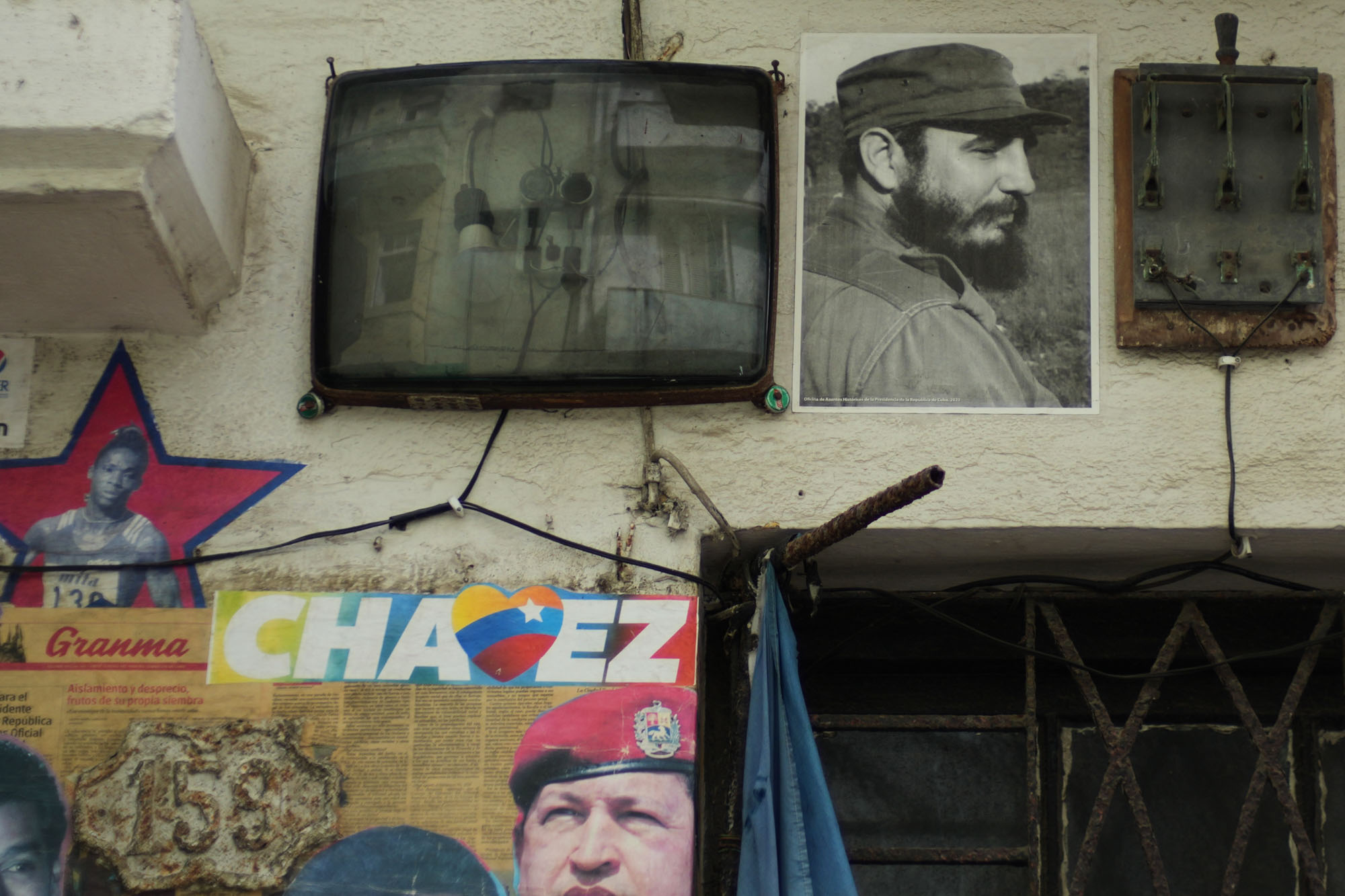
We’ve been trying to do that for [nearly] 70 years. Dumb as we want to be, continue to do what you’ve done, you’ll get what you got. I appreciate, in one respect, that the Trump administration is sort of approaching things because of an opportunistic situation regarding Venezuela. This quasi-blockade has created conditions where now we have 51 prisoners that have been released, that we’re having a different conversation with the leadership, that we’re negotiating a different framework from a different position of strength. So I appreciate and admire at least a willingness to iterate. But look, you talk about a dictatorship, right? You’re talking about Maduro. No love lost for Maduro. You’re talking about a dictatorship, you’re talking about the leadership in Cuba today. So pursuing those values, absolutely,
Should the US defend Taiwan if the Chinese invade?
We’ve had a position of strategic ambiguity, which has defined the United States’ position for decades. I submit to that point of view, those conditions will present themselves on the basis of whatever the facts are on the ground. But I will say this: I’m very concerned about what’s going on in the Middle East, for an additional reason that we’ve now taken the eye off the ball with the summit with President Xi. And this will define more things in more ways, on more days, in terms of our fate and future, the competitiveness in China versus the United States.
And I will just play into one statewide thing. The reason I am so fixated on this issue of green energy is it’s about innovation and it’s about competition — it’s the reason I’m not focused on electric power, I’m focused on economic power as it relates to EVs, and we are ceding it to China. And it’s about statecraft for them, it’s about influence, it’s about supply chains. And so all of these things are connected, because you’re going to talk to me about Taiwan, you’re talking about supply chain, you’re talking about access to critical national security and component parts for our innovation. So Taiwan is an incredibly important ally of the United States of America, and I appreciate the Trump administration made one of the largest arms purchases to Taiwan just a number of months ago. But I absolutely abide by strategic —
So you’re staying ambiguous, keeping with U.S. policy?
I think the policy is a sound one. And even when Biden sort of indulged saying, “Absolutely, [defend Taiwan militarily]” they walked it back for many different strategic reasons.
So if you do run for President, you get the nomination, man, they are going to hang the city.
San Francisco? Bring it on, man. One of the greatest, most dynamic, most revered cities on planet Earth.
You’re not going to run from it?
Give me a — why? Why would I ever run from such greatness?
Symbol of lefty excess, no?
How about the symbolism of entrepreneurialism, of innovation, of daring? This city defines so much of what’s great about my state and our country. There’s the American Dream and the California Dream. Only one other state attaches itself to the dream, and so much of that — these are dream makers in San Francisco. You talked about the greats. You’re talking about Willie Brown, you’re talking about Nancy Pelosi, you’re talking about some of the most creative entrepreneurs, scientists, engineers, Nobel Laureates. You’re talking about UCSF. You’re talking about the history of policy and innovation. I mean that’s the Bay Area. Come on — AI?
You’re talking about my city. You’re talking about the future. You’re talking about San Francisco running away from the future to recreate a nostalgic past, to try to recreate the 19th century? That’s doubling down on stupid. We’re all about the future.
So you will embrace this city if you do run for president?
I celebrate it. I revere it. I revere this state. I revere its cities.
Mayor, come on over here — you get the final word: Should Gavin Newsom run for president, yes or no?
Newsom: Oh Jesus.
Former San Francisco Mayor Willie Brown: Only if there’s a pre-commitment.
Newsom: Oh Jesus.
What does Willie want, a pardon?
Brown: That’s what I need!
So should he run?
Brown: He should win, when he runs.
So what’s the ticket, should it be Newsom and Moore?
Brown: If there’s going to be Black guy, it’s going to be Brown!
There we go, folks, we can wrap there, we can’t top that.