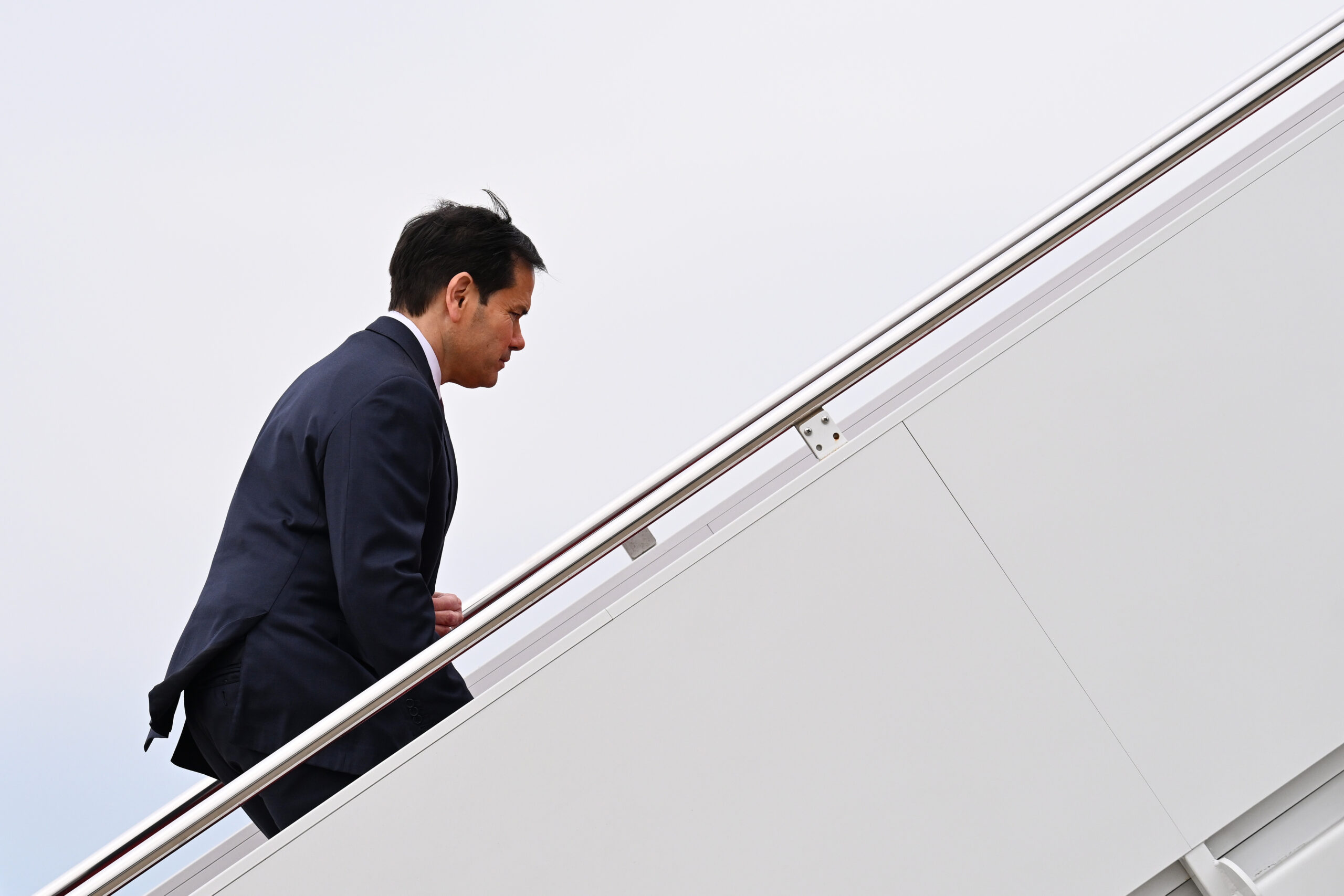
As more Americans, including many Republicans, grow alarmed about the U.S.-Israel war with Iran, one person has largely escaped the backlash: Marco Rubio.
President Donald Trump is getting most of the heat. Vice President JD Vance and Defense Secretary Pete Hegseth have also drawn ample scrutiny for their positions.
Rubio’s political star, meanwhile, is on the rise in the GOP, while many Democrats have stayed relatively quiet about his failures. This is especially notable because Rubio, alongside serving as secretary of State, has spent nearly a year acting as Trump’s national security adviser.
That role, as traditionally defined, ensures that U.S. national security decisions are fully thought out, and that the entire U.S. government is coordinating and prepared for, say, going to war. That can include checking whether U.S. agencies and departments are engaging other capitals or affected parts of the private sector, such as oil companies.
From the start of the Iran operation on Feb. 28, however, it was clear there was little such planning or collaboration. The U.S. has been caught flat-footed on everything from the spike in oil prices to drones targeting U.S. embassies. Senior Trump aides don’t even seem to have coordinated their talking points; Hegseth, for instance, keeps making religious references, while top intelligence officials can’t provide a clear answer on whether Iran posed an imminent threat to the U.S.
Rubio caught some flak for suggesting Israel pulled the U.S. into the war, a claim he later walked back. The only other serious criticism he’s received has been related to his role as secretary of State — in particular, delays in pulling out U.S. diplomats and evacuating U.S. citizens from countries affected by the war.
Curt Mills, executive director of The American Conservative magazine, which backs a restraint-minded U.S. foreign policy, said Rubio deserved more criticism for his role in the war. But he added that, especially in Republican circles, there’s “a halo around the guy” and “it’s not cool to go after him.”
When I asked several lawmakers, U.S. officials and analysts why Rubio seems so protected from criticism over his role in the Iran war, I was told the following:
First, Trump is the easier, more important target. His jaw-dropping rhetoric aside, he’s the president, and the buck stops with him.
Another factor: The foreign policy establishment tends to think of Rubio as secretary of State more than as national security adviser. So while critics are quick to blame him for slow embassy closures, they often forget to hold him accountable for the whole national security apparatus.
Perhaps above all, even Democrats enraged by the state of affairs in Iran see Rubio as one of Trump’s more competent aides.
“He’s the least crazy,” one Democratic senator told me after I granted them anonymity, like others, to talk about a sensitive issue. “If he gets fired, Trump would replace him with someone a lot worse.”
(On Tuesday, Rubio was set to testify in federal court on an unrelated money-laundering case against a longtime friend and former lawmaker — a relationship that also has not impeded Rubio’s rise.)
Many in Washington also don’t notice that Rubio is more focused on his role as national security adviser than as secretary of State.
Rubio aide Mike Needham acts as Rubio’s stand-in at the State Department day-to-day, several people there have told me, while Rubio spends much of his time at the White House. (A State Department spokesperson pushed back on the notion that Needham was in charge, and I’m told Rubio has the ultimate say on anything significant at Foggy Bottom.)
This isn’t entirely surprising. Doing both jobs in full is nearly impossible, and staying close to Trump is smart considering how many people try to influence him, including by cold-calling his number.
In his role as national security adviser, Rubio has shrunk the National Security Council staff and limited their ability to convene government agencies for policy discussions, as I’ve chronicled before. Instead, the most sensitive conversations are held in the West Wing among Trump and a few aides who then tell agencies to implement his decisions, often without stress-testing the ideas.
That means many people who could have flagged or at least prepared for challenges related to Iran — such as the threat to the energy sector or the need to coordinate with U.S. allies — were left in the cold. And most such people have little incentive to act without orders from above, because after last year’s staff purges, everyone is afraid of being fired.
That includes people in the State Department’s Middle East bureau. One staffer there told me that until the war started, they had not been tasked with any actions related to it. “I had all sorts of people messaging me, like ‘Oh, you must be so busy,’ and I’m like, ‘Nope.’”
The State Department called the premise of this column “ridiculous.” “Because of the hard work of hundreds of personnel, over 50,000 Americans have been provided security guidance and travel assistance by our 24/7 task force,” spokesperson Tommy Pigott said.
The White House said Rubio is working in “lockstep” with Trump and his whole national security team. “The United States is crushing the Iranian terrorist regime,” spokesperson Olivia Wales said.
Rubio despises Iran’s Islamist regime, but, from what I’ve gathered, he was not a major force pushing for a large-scale attack on Iran — not like Israeli Prime Minister Benjamin Netanyahu or Sen. Lindsey Graham (R-S.C.). That said, Rubio didn’t fight the idea, and he was open to the notion that the time to hit Iran was now because the regime was unusually weak. So one would expect him to have kicked planning and coordination into high gear.
I’m not saying that Rubio needs to clue in every diplomat and their dog on every operation. Very few people on President Barack Obama’s team were read-in on the raid that killed Osama bin Laden. The Trump administration’s capture of Venezuelan leader Nicolas Maduro, too, was overseen by Rubio and just a handful of others.
But those were surgical maneuvers. Iran is a different ballgame — an entrenched regime, proxy militias outside its borders, and the potential to damage the world economy. Iran’s Supreme Leader Ayatollah Ali Khamenei, who was killed in the war’s opening hours, warned that Iran would make the entire region pay if the U.S. attacked. He wasn’t kidding.
For years, the U.S. military has run war games about Iran, and that included scenarios we’re seeing now, such as Tehran strangling the Strait of Hormuz. The result was nearly always major bloodshed and destruction, one Democratic House member said.
Rubio knew all this.
Still, Rubio has plenty of defenders — or, at least, sympathizers.
They stress that his cuts at NSC were at the behest of Trump, who doesn’t trust the bureaucracy.
“The absence of process is exactly what Trump wants. And that’s what Rubio gives him,” said Ivo Daalder, a former U.S. ambassador to NATO. Daalder said Rubio deserved blame for not pushing Trump to allow for a more robust decision-making process, “but if he’d done any of that, he’d been long gone.”
Some Trump administration officials added that having too many people involved leads to leaks that can endanger operations or are aimed at undermining Trump’s agenda.
One of those officials said Rubio knew that limiting information flow would allow the U.S. and Israel to hit Iran hard early on. “Go back to the first few days: We took out their entire leadership because they didn’t expect it,” said the official, who is familiar with Rubio’s role.
I asked the White House if Rubio sought permission from Trump to run a more robust policymaking process for Iran. I didn’t get an answer.
A former Trump administration official, though, said the decimated NSC staff barely has any experience running such a process. The existing “process” is basically principals calling each other. (On Signal, maybe?)
Another reality for Rubio: Trump’s special envoys are playing their own games of Risk. People like Steve Witkoff and Jared Kushner, Trump’s son-in-law, lack technical expertise on Iran’s nuclear program and often appear ready to take Moscow at its word. But they have a direct line to the president, and Rubio can only tell them so much.
The Trump administration official familiar with Rubio’s role argued that things are going well overall, especially on the combat side. Even if Rubio had run a far more robust policy process and various agencies were more prepared, there was going to be some chaos, the official said. Plus, Rubio deserves credit given the mercurial president he reports to.
“Rubio shapes the president quite a bit. He gives him advice. He smooths some of the edges. He executes competently,” the official said.
Besides, said one person familiar with Rubio’s thinking, history may judge Rubio kindly if Iranians are finally freed of their oppressive rulers. “We don’t know if Iran is going to be a success or not,” they said.
In private sessions he’s held with lawmakers, “Rubio presents himself as an irrepressible optimist,” said Sen. Chris Murphy (D-Conn.) “He often falls back on simplistic moral arguments. ‘Maduro is a bad guy. The ayatollah was a bad guy. Thus, anything we do to try to hurt them must be in the national interest.’”
Murphy views Rubio as a true believer in regime change. He mused that that bias may have led Rubio to intentionally avoid launching a serious internal government discussion.
“If a process that fairly vetted risks would have made the operation look riskier and less likely to succeed, why run that process if your goal is regime change in Iran?” Murphy said.
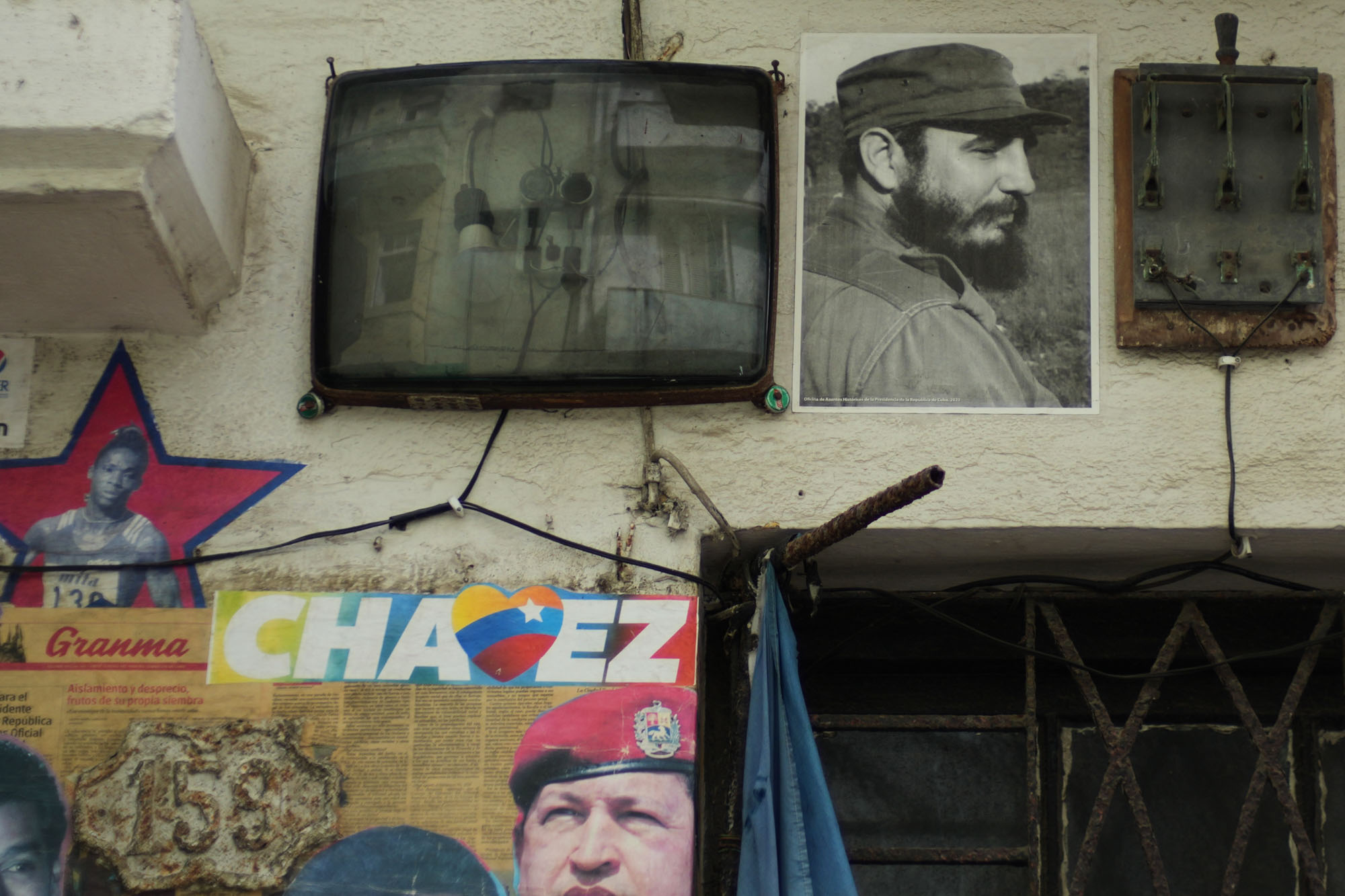
Besides, Rubio needs to stay in Trump’s good graces for a goal more central to his identity: Changing the regime in Cuba.
In any case, don’t expect a crescendo of calls for Rubio’s resignation anytime soon.
“There’s a sense he’s the sane one,” the House Democrat said.